Showing posts with label cancer coach elyn. Show all posts

Monday, January 6, 2014

Friendly Cancer Etiquette

What we say to a friend with cancer can strain or ruin the relationship--and it can also be detrimental to her already fragile state and will impede her healing. Don't know what to say? Tell her that; sit with her and let her talk. Listen, really listen without judgement or comments. Give her a hug. 

Happy New Year to all and please enjoy the following tips for helping a friend with cancer:


 (Originally written for Surviving Beautifully.)

Please visit Surviving Beautifully for expert advice during cancer:
Visit Elyn at Surviving Beautifully
Elyn
             ~~If you don’t know your options, you don’t have any~~
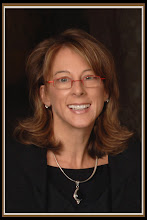
Elyn Jacobs is a breast cancer survivor, professional cancer strategist, speaker, and the Executive Director for the Emerald Heart Cancer Foundation. Elyn empowers women to choose the path for treatment that best fits their own individual needs. She is passionate about helping others move forward into a life of health and well-being. Elyn has been featured on CNN Money, Talk About Health, and Breast Cancer Answers and has written for the Pink Paper, Breast Cancer Wellness, Integrative Oncology Essentials, Surviving Beautifully, Body Local and more, and writes the Options for Life column for the Natural Healing-Natural Wellness Newsletter.  Elyn hosts the Survive and Live Well Radio Show on the Cancer Support Network. Elyn lives in New York with her husband and two young boys. http://elynjacobs.wordpress.com/about/

Listen to the Survive and Live Well Radio Show on iHeartRadio Talk
Follow Elyn on Linkedin
Tune in to the Survive and Live Well Show
Replay the Survive and Live Well Radio Show archives
Follow Elyn on Facebook

Follow Survive and Live Well on Twitter


Sunday, April 21, 2013

Integrative Oncology: Coming Soon via Your Headphones


Healing with music is far from a new idea.  Every civilization in history has used music to heal and cure. However, now we actually have science that explains and proves this.
Music changes the speed at which your brain waves vibrate, which in turn produces different neurochemicals. Your brain’s flexibility helps you create long-term change and even target those changes to specific tasks and goals. If you can trick your brain into producing more of that blood chemistry to bring you up or down, you can actually train it to respond to stressful situations better.  For example, to rewire your brain to relax, you can play nature sounds that calm you, which can be helpful in situations like driving in heavy traffic.

You can also play songs that energize you; songs you exercise to or play before you go out for the night that really pump you up. 
Music can help you to relax, energize or help you sleep; you can use the power of sound to fine tune brainwaves so the body re-balances itself.  

For the greatest benefit, pay attention of the music actively with headphones rather than having it play in the background.  Live concerts intensify music’s effects the most.  It’s not just the visual effect of seeing the emotions of the musicians, but also the vibrations.  Consider how you “feel” the music in your belly when the music is so intense with vibrations.  Headphones will help you to recreate this activity.
Oncologists are now recommending sound as medicine; or should I say prescribing it to enhance medicine. To boost the efficacy of treatment we need to improve sleep and reduce stress.  Cancer treatment can also zap our energy.  Regardless of the path taken for our cancer, music can heal.
 

A pioneer in the field of sound healing, Dr Mitch Gaynor has developed Crystal Sonic Therapy™. Take a look at this post: Healing Cancer: One Note at a Time 
Also read: Sound Stimulation During Sleep Can Enhance Memory
For more integrative therapies and recommendations, please visit my website www.elynjacobs.wordpress.com .

Elyn


~~If you don’t know your options, you don’t have any~~

Elyn Jacobs is a breast cancer survivor, professional cancer coach, radio talk show host, speaker, and the Executive Director for the Emerald Heart Cancer Foundation. Elyn empowers women to choose the path for treatment that best fits their own individual needs. She mentors women who are coping with issues of well-being associated with breast cancer and its aftermath; she is passionate about helping others move forward into a life of health and wellbeing. Elyn has been featured on CNN Money, Talk About Health and more, and is a columnist for Natural Healing-Natural Wellness. She has contributed to Breast Cancer Answers as well as written for the Pink Paper, Breast Cancer Wellness, Integrative Oncology Essentials, and other publications and newsletters. Elyn lives in New York with her husband and two young boys.

Follow Elyn on Linkedin

Follow Elyn on Facebook

Follow Survive and Live Well on Twitter


Thursday, April 18, 2013

Caregiver’s Survival Guide: Six Steps to Maintain (or Regain!) Your Sense of Balance


There is no doubt that being a cancer patient is overwhelming at best.  However, we often overlook the toll it takes on our loved ones, our caregivers. The following is a guest post by Theresa Conti.  She shares with us some advice for caregiving.

Finding balance between caring for the needs of your loved one and the needs of yourself may feel like a daunting task. You may feel weighed down with responsibility, and not know where to turn for help or support, or watch as your resources dwindle (emotional, physical, and financial!) and wonder what to make it of all. But don’t despair! There is a solution and it starts with self-care.
 
Taking time to replenish yourself may seem like a luxury you can ill afford. Yet the investment will be well worth your while and the dividends you receive will keep you feeling energized and smiling. Good medicine for you and the ones for whom you care.
 
These six simple steps will revolutionize your life and put a little zest in your spiritual bank account:
 
·         Breathe!
Breathing is simple, yet something we often forget to do when under stress. Holding our breath disrupts our body’s natural rhythm, and when chronic, creates physical, mental and emotional tension.
This following exercise will help to reduce stress and get you back in the flow. But don’t take my word for it. Try it for a month and see for yourself.
To implement, pick an activity you do throughout the day, such as answer the telephone, and use it as a reminder to stop and take note of your breathing. Note if your breath is deep and flowing or short and shallow, and if there is anyplace in your body where you are feeling tight or tense. Next, take three slow deep breaths. Consciously feel your breath as it moves in through your nostrils and out through your mouth. When done, take note of how you feel.  Best of all – breathing is free and can be done anywhere!
 
·         Get Inspired!
Inspiration feeds the body, mind, and soul. Find something you love – and enjoy it! Read a poem, listen to music or smell a flower on the way to work. Even five minutes a day will do wonders for your mood.
 
·          Make a Date!
Thank Julia Cameron, author of The Artist’s Way for this one. 
Take time once a week to go on a dream date. Yes, yes, I know. Taking time for yourself may seem impossible, but even an hour or two once a week will serve to replenish and energize you. Don’t know what to do? Make a list of things you like to do (or used to!), then block time out in your calendar once a week just for you and do them!  Blocking out time for yourself will bolster your emotional bank account, and leave plenty left over to share! (Note: No work or errands allowed!)
 
·         Set Boundaries! 
Setting boundaries can be tough. We want to please; to do our best.
Yet, maintaining a sense of balance requires that you are clear with yourself and others about what you can and cannot do. Saying “no” or settling limits on how much you can give may feel uncomfortable. However, it also provides an opportunity to heal and grow. (Need some help? Try reading When I Say No, I Feel Guilty by Manuel J. Smith, Ph.D.) 
 
·         Have Fun! 
In addition to your weekly dates, be sure to plan something fun on a regular basis. Having fun invigorates, inspires and increases the endorphins that lift our spirits and keeps us feeling strong and healthy. 
 
·         Connect with Others! 
Coffee with a friend or a chat on the phone can be medicine for the soul. Apply daily! 
 
Theresa Conti is a Reconnective Healing® Practitioner, Spiritual-Life Coach and Workshop Presenter, specializing in working caregivers of all kinds. For more information, please visit her website at www.reconnecting2you.com.  Theresa can also be reached at Theresa@reconnecting2you.com or at 917-478-1722.
 
Elyn
~~If you don’t know your options, you don’t have any~~
 
Elyn Jacobs is a breast cancer survivor, professional cancer coach, radio talk show host, speaker, and the Executive Director for the Emerald Heart Cancer Foundation. Elyn empowers women to choose the path for treatment that best fits their own individual needs. She mentors women who are coping with issues of well-being associated with breast cancer and its aftermath; she is passionate about helping others move forward into a life of health and wellbeing. Elyn has been featured on CNN Money, Talk About Health and more and has contributed to Breast Cancer Answers as well as written for the Pink Paper, Breast Cancer Wellness, Natural Healing-Natural Wellness, Integrative Oncology Essentials, and other publications and newsletters. Elyn lives in New York with her husband and two young boys.
 
Follow Elyn on Linkedin
Follow Elyn on Facebook
Follow Survive and Live Well on Twitter


Wednesday, April 3, 2013

Let’s Get Real


The following is a guest post by Barbara Musser, author of Sexy After Cancer . Barbara is a respected and inspiring intimacy and sexuality speaker, educator and coach, facilitator and author. She was diagnosed with breast cancer in 1989 as a young single woman. She married and had a child after treatment. Since then, she has worked with thousands of women, couples, and health care professionals, specializing in creating programs to help heal the trauma of cancer treatments to intimacy, sexuality and relationships. She does this with wisdom, humor and grace.
Sexy After Cancer~ I laughed and I cried, but mostly I found that this was a much needed book that will help restore the love in many- a- life.
 I love Barbara’s recommendation for taking inventory of the areas of your life that aren’t working for you and making any changes that are more aligned with who you are now, addressing  what is important to you and what is not.
I love, love, how Musser stresses the importance of taking an advocate along to all appointments, including surgery (okay, well not in the OR, but you know what I mean).  Take an impartial friend, partner or family member….someone who can stand tall for you when you are at your weakest moment; someone who can ask questions and take notes and not well up with emotions.  Trust me; an advocate can make all the difference.
This book is your roadmap for creating or re-creating the sexy you that you need, love and deserve.  You will find useful tips and even recordings so you don’t have to juggle a book while trying to implement Barbara’s liberating exercises.
Read Sexy After Cancer, and rediscover the sexy in you. Rediscover the happy, healthy, robust and even sexy life you thought was a casualty of your breast cancer journey; tips, tools and hope for a healthy and satisfying intimate and sexual life after diagnosis.
Let’s Get Real

When cancer comes into your life, things get very real very fast. It’s shocking to be on the roller coaster of making decisions, wondering why it happened to you, dealing with all the details of life so that you can have treatment, and all the stuff of life. Underneath that, there’s the very real experience of what matters in life and what doesn’t. You know this.
Something that gets talked about mostly on the surface level is the impact of diagnosis and treatment on you as a woman. In addition to making choices that will keep us healthy during and after treatment, sexual health gets a nod at best. And the decisions we make about treatment can have an enormous impact on our sexual life ~ libido, medical menopause that may be permanent, loss of pleasure, fertility, to name a few.
Here’s the rub ~ if we don’t know about these consequences of treatment it’s really challenging to factor them into treatment decisions. If you haven’t had children and want to retain that possibility, there are things to consider before treatment begins. After treatment it’s too late. This is heart wrenching.
The good news is that many of the changes to sexual function that result from treatment, can be remedied. It’s sobering that many women tell me that their sex life wasn’t so great before cancer, and wonder if it’s worth doing something about it after cancer. Really? I’m not so sure about this. I think it’s really about the sadness, grief and fear that comes along for the ride, and not having resources to support you on this part of the cancer journey. Rather than ending our experience of ourselves a beautiful, desirable and sexy, cancer can be the catalyst for getting real about the true nature of being a woman and getting beyond our limiting thoughts about ourselves.
As a firm believer in living a good life, including wonderful intimacy and sexuality, I’ve been researching, learning and teaching about this for years ~ borne out of my own necessity, and unwillingness to not have a great sex life after cancer. We all have many archetypes in us and I’m the Wake-Up Fairy for your Inner Aphrodite.  
There are lots of ways to love yourself, experience pleasure and awaken a sleeping libido. Check out my book, Sexy After Cancer ~Meeting Your Inner Aphrodite on the Breast Cancer Journey. Peruse my website for article, blogs and events. Read my Sexy Saturdays blog on http://thepinkfund.wordpress.com/. 

         ~ Barbara Musser
          Founder and CEO, Sexy After Cancer
          www.sexyaftercancer.com

Barbara Musser is the founder and CEO of Sexy After Cancer. She is the author of Sexy After Cancer ~ Meeting Your Inner Aphrodite on the Breast Cancer Journey. She is a member of AASECT, the American Association of Sex Educators, Counselors and Therapists and ISSWSH, the International Society for the Study of Women’s Sexual Health. She writes a weekly Sexy Saturdays blog for The Pink Fund and writes the Sex and Intimacy column for The Pink Paper magazine.

Elyn Jacobs is a breast cancer survivor, professional cancer coach, radio talk show host, speaker, and the Executive Director for the Emerald Heart Cancer Foundation. She is also on the peer review board of the Natural Standard Database. Elyn empowers women to choose the path for treatment that best fits their own individual needs. She mentors women who are coping with issues of well-being associated with breast cancer and its aftermath; she is passionate about helping others move forward into a life of health and wellbeing. Elyn has been featured on CNN Money, Talk About Health and more and has contributed to Breast Cancer Answers as well as written for the Pink Paper, Breast Cancer Wellness, Natural Healing-Natural Wellness, Integrative Oncology Essentials, and other publications and newsletters. Elyn lives in New York with her husband and two young boys.

Follow Elyn on Linkedin
Follow Elyn on Facebook
Follow Survive and Live Well on Twitter


Wednesday, March 27, 2013

My Parent Has Cancer: Why Write a Book?


The following is a conversation with Marc and Maya Silver, authors of My Parent Has Cancer and It Really Sucks, the first guide for teens whose parents have cancer. Maya was 15 when her mom, Marsha, was diagnosed with triple-negative breast cancer. Marc, Maya’s dad, is an editor at National Geographic and the author of Breast Cancer Husband. His wife, Marsha, is now in good health.  

Marc and Maya, what inspired you to write this book?

Marc: I wish I could say the book came to be because I had an epiphany: Families like ours – two teens, mom diagnosed with breast cancer – need help.

But that is not the truth. In 2001, our family muddled through Marsha’s months of cancer treatment. It never occurred to any of us that our kids might need help coping.

Then, a few years later, our dear friend Anna Gottlieb, the founder and director of Gilda’s Club Seattle, called me to share some essays from the group’s annual essay contest: “It’s Always Something.” Teens are invited to write about how they’ve been “touched by cancer.” Many of them wrote about a parent’s cancer with intense feelings that defy the stereotype of the sullen, uncommunicative teen.

“This has to be your next book,” Anna said.

 She was right. But it took a bit of doing. I soon realized that I needed a co-author who had in fact faced a parent’s cancer as a teen. Our older daughter Maya is a phenomenal writer -- creative writing was her major at Oberlin, where she earned the Diane Vreul's Fiction Prize in 2008.

 
Maya: I have to admit that at first I wasn't crazy about the idea. My mom's cancer is something I never fully dealt with. Even in my early 20s, it was a topic I didn't like talking about. Pouring myself into a book project about it would not only require me to confront the experience head-on, but to live, breathe and dream about cancer as we spent months in research, interviews, writing and editing. On the flip side, I knew that there was a gap in resources for teens dealing with a parent's cancer. I understood that a book like this probably would have helped my sister and me. 

 
Marc: So we began working together to shape a proposal. We realized that the book needed to reach out to teens, but we also knew that parents would probably be the ones to buy the book. So the main narrative would be aimed at teens, but there would be a special section of advice for poor, beleaguered mom and dad.

Many publishers passed on the idea. They didn’t “get it.” Is this a health book? A young adult book? What kind of book is it?

 Maya: Our answer always was: It’s a book that is sorely needed. A study published in the journal Cancer states that nearly three million U.S. kids live with a parent who’s a cancer survivor, and about a third of the kids are teens. Yet there are very few resources for this 12-19 demographic. As we found out when we put together our proposal, teens in particular need a lot of help coping. They’re at a stage when they’re separating from the family, striking out on their own. Suddenly, mom or dad’s cancer diagnosis pulls them back to the family. The result: A teen who may be resentful, who may hate being looked at with “pity eyes” by friends at school, who has to deal with problems far more pressing than those of friends who worry about break-ups and break-outs and buying the latest video game.

 
Marc: Fortunately, our agent was a tireless advocate for the book, and the editorial staff at Sourcebooks understood why this book is an important addition to cancer literature. And so we began our year of intense work on the project, interviewing some 100 teens, parents as well, and many mental health experts. We hope the book can serve as a support group for teens who don’t have anyone to turn to. We want teens to know that what they’re feeling is probably normal. It’s normal to worry still about who’s going to drive you to the prom. It’s normal to be embarrassed by a parent who’s bald from chemotherapy. It’s normal to have a closer relationship with one parent than the other, and to secretly wish that the other parent was the one with cancer.

 Maya: We set two rules for our book: Teens, don’t feel guilty. You have your own way of coping, and you don’t have to behave like any other teen in this book.

And parents, do not use the book to make your teen talk if he or she doesn’t want to. 

 Marc: And we think Bailee Richardson, who was 12 when her mom was diagnosed with cancer, says it all when she shared this advice: “Stay strong. Don’t let it ever get the best of you.”

Maya, you are right, this is a book sorely needed.  Being a teen is hard enough; being a teen whose world is rocked by cancer, well that is a whole other ballgame.  We all know how hard it is to be a caregiver, and we certainly know how hard it is to be a patient, but we just don’t know or appreciate just how hard our own diagnosis on our teens (think communication, expression, social woes, and hormones). I often worry about the emotional side, the temporary and lasting physical tolls that are really somewhat unknown.  Thank you both for this guide and for sharing it with us.

To read more about their journey, please visit My Parent Has Cancer and it Really Sucks

Elyn
www.elynjacobs.wordpress.com

~~If you don’t know your options, you don’t have any~~

Elyn Jacobs is a breast cancer survivor, professional cancer coach, radio talk show host, speaker, and the Executive Director for the Emerald Heart Cancer Foundation. She is also on the peer review board of the Natural Standard Database. Elyn empowers women to choose the path for treatment that best fits their own individual needs. She mentors women who are coping with issues of well-being associated with breast cancer and its aftermath; she is passionate about helping others move forward into a life of health and wellbeing. Elyn has been featured on CNN Money, Talk About Health and more and has contributed to Breast Cancer Answers as well as written for the Pink Paper, Breast Cancer Wellness, Natural Healing-Natural Wellness, Integrative Oncology Essentials, and other publications and newsletters. Elyn lives in New York with her husband and two young boys.

Follow Elyn on Linkedin

Follow Elyn on Facebook

Follow Survive and Live Well on Twitter


*       

Friday, March 8, 2013

Magical Mushrooms; the Sequel


Perhaps you have Read my post on Magical Mushrooms: How they Reduce Breast Cancer Risk.  Here is some more fun mushroom wisdom.

Coriolus mushrooms are actually the source of PSK, a compound used in drugs used to treat a wide variety of cancers.  PSK seems to work in multiple steps of the malignant process by inhibiting adhesion, invasion, motility and metastatic growth of tumor cells in animal models of cancer.  Also called Turkey Tail, Coriolus PSP (supplement form that differs slightly from the drug PSK) offers significant immune support.  In fact, the “cold remedy” suggested by my oncologist is to take Coriolus PSP, oregano oil, chaga and grapefruit seed extract (all in supplement form) for three days.  I wouldn’t take oregano oil for too long or too often as it is estrogenic properties, but as part of a quick cold remedy, it works well. 

Via Mark Kaylor, Mushroom Wisdom:

“In many parts of the world, Turkey Tail extracts are used as adjuvants in cancer therapy, both as prescription items for instance in Japan, or as dietary supplements taken by patients along with conventional treatment …As a cancer-preventive agent used on a regular basis Turkey Tail may inhibit carcinogenesis by reducing the effects of some carcinogens, such as those occurring in tobacco smoke, on susceptible host cells; it has shown anti-tumor activity in many cancers (shortened for this post).

The use of these extracts during conventional cancer treatments, such as chemo and radiation therapy, have a rational basis because some research shows that it might reduce the possibility of secondary malignancies induced by radiotherapy and cytotoxic chemotherapy.  Turkey Tail may also protect healthy host cells during radiation and chemo treatments by either directly or indirectly acting as an antioxidant, reducing the effects of oxidative stress.”

A note about medicinal mushrooms:  After 3-4 months using a single extract at a high does, a small number of people will experience a slight “tailing off” in terms of immune support.  Using two extracts simultaneously creates a far more powerful immune response than using any single extract alone.   (JHS Natural Products).  When using mushroom extracts for preventive immune support they can be used at a lower dose as compared to use for immune challenges, so the “tailing off” is not experienced.   The best choice over the long term may be to rotate between two different mushroom extracts, using one extract at a time, and then rotating to a different extract every six months.  Even though the “tailing off” is not experienced at lower doses, it may be best to keep coming at the immune system from different directions, changing up the protocol to keep it fresh.  That said, this is all a very individual choice and I have had good luck with using maitake and shitake first and then switching to chaga and shitake.  Recently I added in meshima too.   It is best to speak with your medical provider for advice on the best combination for your body. 

Nothing in this post represents medical advice, and I encourage you to discuss this information with your integrative oncologist or naturopathic doctor. I have compiled this information solely for those seeking information on medicinal mushrooms and their ability to support the body against cancer.   

For more mushroom wisdom:


Elyn


~~If you don’t know your options, you don’t have any~~

Elyn Jacobs is a breast cancer survivor, professional cancer coach, radio talk show host, speaker, and the Executive Director for the Emerald Heart Cancer Foundation. She is also on the peer review board of the Natural Standard Database. Elyn empowers women to choose the path for treatment that best fits their own individual needs. She mentors women who are coping with issues of well-being associated with breast cancer and its aftermath; she is passionate about helping others move forward into a life of health and wellbeing. Elyn has been featured on CNN Money, Talk About Health and more and has contributed to Breast Cancer Answers as well as written for the Pink Paper, Breast Cancer Wellness, Natural Healing-Natural Wellness, Integrative Oncology Essentials, and other publications and newsletters. Elyn lives in New York with her husband and two young boys.

Follow Elyn on Linkedin

Follow Elyn on Facebook

Follow Survive and Live Well on Twitter


Sunday, February 24, 2013

Brain Tumors: Why Everyone Needs an Advocate


Okay, truth be told, this post is not on brain tumors.  Well it is, sort of, but it is about my own personal fear;  one of the reasons I do what I do—advocate for others.

In 2007 I had a bilateral mastectomy for breast cancer; I lost my mother to breast cancer; my sister was diagnosed with breast cancer.  All of this had a significant impact on my life—to say the least.  But, the most noteworthy experience that year was the severe and life-threatening asthma attack that my then five year old experienced.  I spent five nights in the PICU with him; had I not been persistent, I would not have had the pleasure of residing at New York Presbyterian Hospital.  While I realize this is not a coveted vacation destination, had I listened to the pediatrician I rushed my son to that first fateful day, likely I would not have him. 
My son had not been feeling well-- seemed nothing more than seasonal allergies; but for someone with a child who has asthma, I was on high alert.  We had gone to my parents beach house to enjoy the early fall weather, but during the night, I became aware that my son was not breathing right.  I gave him his nebulizer repeatedly with no relief.  In the morning I called our pediatrician.  She suggested I either come right in to see her or consult a local pedi.  Afraid to drive with a child in that condition, I took him to a local.  That pediatrician said he was fine and sent us on our way.  I called our pedi and told her that my gut says all is NOT fine.  She said she trusted me as mom—that my gut was powerful.  She said I should drive back NOW and in case things got worse, gave me the name of the only “on the way” hospital she would trust.  We made it to NYP and were seen immediately; our pedi had called ahead and they were ready for us.  Despite all efforts, breathing could not be stabilized; our son was admitted.  Turns out, he had a rare virus that was complicating matters; something that had gone undetected over the course of a few days there, but with the persistence of our team, was treated sucessfully.
 (Why, you ask didn’t we go to the local hospital?  Well, they do not have a pedes ward and the wait is extensive…far longer than the drive back to NYP—2 hours—btw, did you know that you can request ambulance transport to your hospital once you are stabilized locally?)

Fast forward a year.  Son gets in a minor bike accident-flew off his bike and hit a roadside boulder.  Bleeding profusely from his forehead (helmet slid up but did protect him from his direct hit back of the head from a neighboring boulder), we headed to the ER.  After hours there (yes, should have driven back to the city but the bleeding sent me local—big mistake), his energy was spent, and post adrenaline-- he was tired; we were told he was not responding and needed a CT scan—this “proclamation” was made not by a doctor, but by a PA.  Needless to say, our pedi was irate that we had subjected him to this radiation.  She explained that the hospital was not equipped to handle the unlikely negative results and that in my emotional state, took advantage of me and ordered the test.  My son was just tired from the ordeal and the late hour, simple as that.
Everyone needs an advocate; we are all far too emotional to be expected to stand up for ourselves at the time we most need to do it.  I wish I knew then what I know now; most CT scans are unnecessary and use of one must be rationally evaluated. 
Sometimes kids don't need a scan at all. They just need to be watched in a safe setting. One study showed that kids who went to an ER after suffering a minor head head injury were less likely to get a CT scan if they were simply observed in the ER for 4-6 hours -- and that observation period didn't compromise their safety “  or more likely….the next day. http://children.webmd.com/features/xrays-ct-scans-kids-radiation
It shows that 2 or 3 computed tomography (CT) scans of a child's head (child meaning under 15 years old in this case), can triple the risk of brain cancer. The total dose of radiation would be around 60mGy, while 5 to 10 scans giving a dose of some 50mGy or more, triples the risk of leukemia. http://www.medicalnewstoday.com/articles/246324.php
I have nightmares about the CT; we live in a radiation driven world….x-rays, scans, cellphones and other very dangerous technology we can no longer do without.  We need to be informed; we need to protect our children and oursleves. I was given a CT scan years ago after a minor car acciedent; many stitches to the head, but hardly in need of a scan.  I know better now; I have my boxing gloves on.
Health care crisis? You bet….cash strapped hospitals are ordering tests for many reasons; some necessary, some for profit and some for fear of lawsuits.  It all adds up to a huge expense and a huge health crisis for us all, not to mention for the nation.

So you see, like Helen Reddy says, I am wise, but at a price. “Not a novice any longer...I know too much to go back and pretend…oh yes, I am wise, but it's wisdom for the pain; yes I've paid the price but look how much I’ve gained…..” I am Woman-- the theme song for my radio show, and words I have lived by since my mother first purchased that “45” for me many moons ago. "I have heard it all before...it only serves to make me more determined... makes me stronger." What I have learned I wish to share with you.
You need an advocate; don’t ever head to the ER without one and always take one to any medical consultations during which important decisions will be made. 

I will also add here to pay heed at the dentist’s office….panoramic x-rays and multiple x-rays dramatically increase your child’s risk for cancer.


Elyn

~~If you don’t know your options, you don’t have any~~

Elyn Jacobs is a breast cancer survivor, professional cancer coach, radio talk show host, speaker, and the Executive Director for the Emerald Heart Cancer Foundation. She is also on the peer review board of the Natural Standard Database. Elyn empowers women to choose the path for treatment that best fits their own individual needs. She mentors women who are coping with issues of well-being associated with breast cancer and its aftermath; she is passionate about helping others move forward into a life of health and wellbeing. Elyn has been featured on CNN Money, Talk About Health and more and has contributed to Breast Cancer Answers as well as written for the Pink Paper, Breast Cancer Wellness, Natural Healing-Natural Wellness, Integrative Oncology Essentials, and other publications and newsletters. She created and hosts the Survive and Live Well Radio Show. Elyn lives in New York with her husband and two young boys.

Follow Elyn on Linkedin
Follow Elyn on Facebook
Follow the  Survive and Live Well  Radio Show on Twitter

Donate to the Emerald Heart Cancer Foundation