Showing posts with label CAM. Show all posts

Thursday, March 28, 2013

Mesothelioma Treatment Facilities: How We Match Patients with Doctors

One of my greatest goals is to enable all people diagnosed with cancer to find the best team and treatment for their cancer.  There are many fantastic doctors out there; not every one of them is right for every patient.  Furthermore, not every therapy is right for every patient; we are all individuals with individual bodies, cancers, circumstances and needs.  The following is a guest post by the Mesothelioma Center, who seems to share a common goal. 


At The Mesothelioma Center, one of the most important things we do is match our patients with a mesothelioma specialist. But we don’t just randomly pair people with any health care professional. Our patient advocates consider multiple personal and diagnosis-related factors to make sure patients are getting the best care for their individual case.

Facility Factors – First and foremost, our Medical Outreach Director visits each facility to learn about how they operate. We ask questions like:  

·         What technology do they have?

·         Do they have a designated asbestos-related disease department?

·         What about an integrated care team with nutritionists, counselors and rehabilitation specialists?

·         What does the facility do to set itself apart from other centers?

Once we know the ins and outs of how each facility works with its patients, we can make personalized recommendations that we feel comfortable standing behind.

Doctor Specialties – Even if the facility is nationally recognized for mesothelioma care, they may not have a doctor who specializes in each subtype of the disease. For instance, some centers have pleural mesothelioma specialists, but not peritoneal mesothelioma specialists.

We know how important it is for people to work with a confident, experienced doctor. That’s why our advocates make sure to match patients with surgeons and oncologists who know who to best treat their specific diagnosis. 

Patient’s Diagnosis – On a similar note, we consider a wide range of variables related to the patient’s diagnosis. We try to match patients based on the stage and location of their cancer, the tumor cell subtype, and their overall health. Some treatment centers specialize in early stage mesothelioma, while others specialize in certain subtypes of the cancer. Some patients may like to know how to improve their prognosis after their diagnosis. Our goal is to help patients get the most individualized care for their unique situation.

Patient’s Preferences and Resources – We know that the best doctor for a patient may not be in their city – or even their state. But we also know that most patients can’t simply uproot themselves from their families and daily responsibilities to travel across the country for medical care. That’s why we match patients with doctors that are as close to their geographical region as possible. We also help arrange travel services and grants (often on a free or reduced fare) for patients who do need to commute to their specialist.

We also understand that patients may not wish to use conventional medicine or current practices. That’s why we also match patients with clinical trials and offer information on complementary and alternative medicine (CAM). The clinical trials provide access to innovative, not-yet-available treatments that researchers hope will be the next big thing in mesothelioma treatment. And CAM therapies can offer relief for patients whether they elect traditional treatment or take an all-natural approach. Each patient has their own path, and we do our best to support them along the way.

Author bio: Faith Franz has spent two years researching and writing for The Mesothelioma Center. As an advocate for alternative medicine, she encourages patients to explore all of the treatment options that could potentially save their life.

Elyn

~~If you don’t know your options, you don’t have any~~

Elyn Jacobs is a breast cancer survivor, professional cancer coach, radio talk show host, speaker, and the Executive Director for the Emerald Heart Cancer Foundation. She is also on the peer review board of the Natural Standard Database. Elyn empowers women to choose the path for treatment that best fits their own individual needs. She mentors women who are coping with issues of well-being associated with breast cancer and its aftermath; she is passionate about helping others move forward into a life of health and wellbeing. Elyn has been featured on CNN Money, Talk About Health and more and has contributed to Breast Cancer Answers as well as written for the Pink Paper, Breast Cancer Wellness, Natural Healing-Natural Wellness, Integrative Oncology Essentials, and other publications and newsletters. Elyn lives in New York with her husband and two young boys.

Follow Elyn on Linkedin

Follow Elyn on Facebook

Follow Survive and Live Well on Twitter

Sunday, June 3, 2012

Why We Are Not Winning the War on Cancer

Did you know that most people with cancer do not die of their cancer, but rather from the complications and consequences of cancer and its treatment?  And these complications and consequences are often preventable, or can be successfully treated.”
Keith Block, 2012 Annie Appleseed CAM Conference 
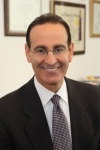
After hearing Dr Keith Block present at the Annie Appleseed CAM conference, I knew I needed to interview him, to share with you all that I learned from him at the conference and more.   Thank you, Dr Block for taking the time to share with me your roadmap for surviving and thriving. Thank you for sharing your thoughts on the lack of success cancer treatment has had on mortality rates. Unless otherwise noted, the information in this post is derived from his presentation and our interview.
In 1971, President Nixon declared war on cancer.  Forty-one years and billions of dollars later, we have yet to win the war. In fact, mortality rates have declined by less than 5% in the last 60 years! In this same time period, mortality from heart disease has dropped 64%. It’s not that we don’t have new cancer drugs; it’s just that they’re not offering major improvement in survival time. Most often these new drugs have only improved outcomes by 4-16 weeks.  The numbers tell the story:  we are not winning the war on cancer. 

                             “Cancer itself is a disease of defects”  KB

Everyone seeks the infamous magic bullet for cancer, the cure.  But cancer is not an isolated group of errant cells waiting to be annihilated by a wonder drug.  Cancer is not merely a tumor; it is an underlying condition, a disease of defects – in genes, of disruption in the microenvironment where the disease resides, as well as in the personal life of the patient and the family in crisis.
It is based on abnormal patterns driven by genetics and lifestyle.  It reflects changes in your body all the way down to the microscopic and molecular levels, changes that began long before you had any symptoms of cancer—indeed, long before cancer was diagnosed or even detectable. The battle against cancer is not so much against a single defect in a protein or cancerous mutation, it is a war on many fronts; it has multiple targets.  Therefore – with the possible exception of one or two types of early stage cancer, using one bullet to eradicate this disease will almost always fail.
 We need a multi-targeted approach.  Even the latest breakthrough drugs that hit two targets don’t come close to addressing this problem.  In theory, using many more than two drugs to hit many targets at the same time would help, however, the cost and toxicities render this unrealistic. And, keep in mind, that cancer is sneaky.  If you put up a roadblock, cancer will find a way to get around it.  But this is not the case for nutraceuticals, where their combined usage has negligible risk and toxicity; they are able hit multiple targets – and thus can address substitute or compensatory pathways – and are relatively inexpensive.  Plant extracts such as turmeric, lycopene, and green tea can target cancer on many levels; they hit many targets and cut off pathways, and they can address those molecular targets without the toxicity of multiple chemotherapies. For example, crucifers, (broccoli, cabbage and the like) can help reduce adverse effects of estrogen; flax has demonstrated a reduction in ki-67, a marker of cancer cell proliferation; green tea markedly countered the malignant conversion for patients at high risk for prostate cancer.   While no one is suggesting that these compounds will single-handedly eradicate cancer, each provides a powerful punch in addressing various mechanisms that drive cancer, and can synergistically interact to create an inhospitable microenvironment where cancer cells lose ground, toxicity is lessened and treatments work better.

Regarding Chemotherapy….

 Dr Block, how can chemo be more effective and less toxic?
 One of the most powerful ways to improve the response to chemotherapy is to administer chemo drugs in concert with optimal biological rhythms.  With this technique, called chronomodulated chemotherapy, pumps are programmed to deliver the largest dose of the drug at a time when cancer cells are most susceptible, and normal cells are the least vulnerable.  And the timing is unique to each drug.  Think of it like a pointed bell curve (sine wave curve); the drug is at first administered at low dose, slowly ramps up, peaks and then tapers off. The research supporting this unique form of chemotherapy infusion demonstrates a reduction in toxicity, improved response, and improved outcomes and survival in a number of studies. In fact, the literature contains studies showing chronomodulation of chemotherapy can even allow for patients to be successfully re-challenged with the identical drugs they previously received and needed to discontinue, either because they were ineffective, became ineffective prematurely, or were too debilitating to tolerate.
For example, for metastatic colon cancer patients, studies show that administering chemotherapy at the optimal time can halve toxicity and double treatment response.  For advanced metastatic ovarian cancer, a study in the journal Cancer reported that optimal timing of chemotherapy can reduce toxic side effects by 50 percent and quadruple five-year survival.

What about the safety of antioxidants and other supplements during treatment?
 Our published studies have shown that most antioxidants displayed no interfering effect with chemotherapy. In fact, they actually synergistically interact to enhance treatment and diminished the side effects of chemo. For example, it may be possible to mitigate some of the cardiac injury from drugs like Herceptin by taking agents like hawthorne and COq10.  In addition, glutamine, vitamin B6, and alpha-lipoic acid appear to help prevent neuron injury (neuropathy).
Click here to read more on supplementation and toxicity.

                               But the doctor said he “got it all!”
 Cancer is not simply a visible disease.  It’s not just about the macroscopic tumors that can be seen on a scan.  The surgeon saying “I got it all,” while certainly a message to be celebrated, should not signal the end of treatment.  One has to think of the disease systemically, not locally; it is a microcellular condition that is impacted by the extracellular environment that the cells reside in.  The typical gold standard, surgery, chemo and radiation, so often fail to prevent the spread or recurrence of the disease because they often miss picking up renegade cancer cells, miss strengthening the body’s biological integrity, and do not reach all of the underlying molecular accidents that initiated cancer in the first place.  As a result, even if the original tumor is removed, the environment that it resided in – as well as the treatments themselves – can create a biological imbalance for cancer to recur.  In addition, many cancer treatments leave a patient with considerable oxidative stress and inflammation, well known to interfere with treatment, increase various side effects including neuropathy, cardiomyopathy, fatigue and mucositis, and provide the fuel for clonal evolution – increasing the aggressiveness of otherwise dormant cells for their next time around.

 From a logical point of view…if cancer liked my body enough to grow cancer once, why not again…I know that I need to make the terrain less hospitable, to change the environment in which it was able to grow. EJ

 Remember, even when the primary tumor is removed, micro-metastases may already have migrated to and seeded other parts of the body.   In fact, it has been estimated that many cancer patients unknowingly already have metastases, malignant cells that have broken off the original tumor, traveled through the bloodstream to far-flung sites in the body, and begun the insidious process of growing in another dangerous tumor.   Keep in mind that all cancers start with a genetic glitch in a single cell. Conventional cancer treatment does little to prevent cells from regrouping, proliferating, and forming new tumors.  Just because you have achieved remission through elimination of the primary tumor does not mean you are home free.  However, the good news is that cancer cells are remarkably fragile.  Unless they are nurtured and protected by the biochemical terrain in your body, they have a difficult time surviving.  Your internal biochemistry can either nourish cancer cells or make the terrain inhospitable to cancer.

          Walking just three to five hours a week can cut cancer death rates by one-half. KB
 We know that lifestyle is directly related to cancer, and that diet and exercise are associated with lower cancer recurrence rates and longer survival.  Recently, the ACS issued new guidelines urging doctors to talk to their cancer patients about eating right, exercising and slimming down if they’re too heavy.  It’s a start, but not specific enough for most of us, nor is it comprehensive enough to help win the war.  Talk to your doctor – ideally one experienced in integrative oncology – about devising your own personalized plan for wellness.  By combining conventional treatments with a personally tailored regimen of natural agents, fitness regimens, and stress management- strategies, we can support our body to improve the chances of defeating cancer.

One last note, if I may.  While in most cases, cancer does not “just happen,” it is also something for which we cannot blame ourselves.  Cancer is not caused by a “bad” diet or a toxic environment.  Food is not either good or bad; let’s just say that some foods are better than others. However, as Dr Block said, cancer is “driven by genetics and lifestyle”. That said, diet and exercise can have a profound effect on the initiation and progression of the disease.  If a genetic defect occurs, our food choices either support or suppress the development of cancer.  I don’t blame myself for getting cancer, but yet now that I fully understand the power of food, I make conscious food choices to support my body against cancer.  Knowledge is power, and if everything I put in my mouth either supports or inhibits cancer, then now I am empowered to gain control. Joy is also an important ingredient for health; so while we want to make healthy food choices, we also need to remember that occasional indulgences and enjoying meals with friends are good for the soul. It’s all about balance and in giving your body what it needs.  Empower yourself to be an active participant in your healing and an advocate for your health.

 In good health,
Elyn

Keith I. Block, MD, is an internationally recognized expert in integrative oncology.  In 1980, he co-founded the Block Center for Integrative Cancer Treatment in Skokie, Illinois, the first such facility in North America, and serves as its Medical and Scientific Director.  He is the author of Life Over Cancer: The Block Center Program for Integrative Cancer Treatment.
Dr. Block is the Scientific Director of the Institute for Integrative Cancer Research and Education, where he has collaborated with colleagues at the University of Illinois at Chicago, the University of Texas M.D. Anderson Cancer Center in Houston and Bar Ilan University in Israel.  Dr. Block is also the founding editor-in-chief of the peer-reviewed journal, Integrative Cancer Therapies (ICT).  In 2005, he was appointed to the National Cancer Institute’s Physician Data Query (PDQ) Cancer CAM Editorial Board, on which he continues to serve today.

Elyn Jacobs is a breast cancer survivor, a professional cancer coach, a radio talk show host, and the Executive Director for the Emerald Heart Cancer Foundation. Elyn empowers women to choose the path for treatment that best fits their own individual needs.  She is passionate about helping others move forward into a life of health and wellbeing. To learn more about Elyn’s coaching services, please visit:  http://elynjacobs.wordpress.com/.  To tune into the Survive and Live Well radio show, please visit http://www.w4cs.com/, Tuesdays at 1pm (est).

Tuesday, November 1, 2011

It’s My Cancer

  The following is a guest post I wrote for Breast Cancer Partner's Blog..... It’s My Cancer


“You have cancer” Three of the most dreaded words you can hear from your doctor.  Your world has changed and you feel a loss of control.    A moment ago you were a student, parent, wife, maybe even a doctor. Now, suddenly, you are a patient.  In the ensuing panic, disbelief, fear, and confusion you have to make decisions.  Likely right now you think “I can barely breathe, let alone function…how am I to figure all this out?”  Well, unfortunately, your life and your quality of life depend on it.  Now is the time to get help, but from who?

A cancer diagnosis leaves one so very vulnerable, not only to the illness, but also to the people all around us. Given all the options today, we have many decisions to make.  We may choose conventional, alternative or a combination of both, and within each modality, there are yet more options. Friends often think they are helpful when criticizing a chosen treatment plan.  Many women diagnosed with breast cancer choose not even to discuss with friends their choice for surgery, as surely some friends will be adamant about mastectomy and others lumpectomy, and this is terribly unfair.  I always say that when a friend or loved one is diagnosed, support is essential, information is helpful, but advice is unacceptable.  It is for us and us alone to choose and be confident with a path chosen, and it is unfair of others to cast doubt or offer opinions. Doubt will bring fear and stress, both of which can be detrimental to healing and survivorship and can compromise all efforts for a positive outcome. 

The recent press regarding Steve Jobs is a perfect example. One might say that Steve Jobs was a bright man.  One might say he made many critical decisions in his life.  One might say that he was not afraid to take chances.  One might even say that he was a trendsetter.  Why is it that friends, family and the media felt they had the right to challenge his choice of a treatment plan and have the right to second guess it now?  To say that “he refused potentially life-saving cancer surgery for nine months, shrugging off protests from his family and opting instead for alternative medicine” is unfair.  Potentially life-saving surgery? Some doctors have argued that his cancer was curable, others say the opposite. Given a diagnosis of a cancer for which conventional medicine has not been particularly successful, it would only make sense to explore all options.  This was his cancer and it was his decision to choose a plan of treatment.  Andrew Grove told Jobs he was crazy.  Art Levinson was frustrated that he could not persuade Jobs to have surgery. It wasn’t their cancer. What matters is that Steve Jobs had confidence in his choice.  What matters is that Mr. Jobs made the final decision on each new treatment regimen.  What matters is that he had the freedom to choose and to change his mind. What is not acceptable is for others to challenge his decisions. What is important is to have an unbiased advocate to assist and support you through treatment. We will never know if it was the destructive mind-body criticism of others that brought on his demise.  We do know that Steve Jobs made sure he sought out all the options and did all he could do to battle his cancer. Knowing your options and obtaining the necessary information is critical in order to make the right choices for you, for your cancer.

There are many options for treating cancer.  Conventional (allopathic) medicine offers surgery, radiation, chemotherapy, and other medical interventions to battle cancer.  For many, this is the route to take.  For others, surgery may be acceptable, but radiation and or chemotherapy either are not an option or are not acceptable to the patient.  Some will take the integrative approach, combing conventional with alternative therapies.  Massage, acupuncture, Chinese Herbal Medicine, nutritional therapy and other treatments associated with complementary medicine can support patients during and post treatment by lessoning the side effects, improving quality of life and improving long-term survival. Still others will choose to use only alternative methods.  The important thing is to choose what feels best to you.  Keep in mind that within these methods, there will be further decisions to make, for example which of the surgeries available would be best or which alternative treatment would be the most effective. Doctors differ in their methods and protocols.  Many women find it a challenge to find a doctor who can hear and respond to her opinions and questions, and all too often women are pushed into a path for treatment that does not suit her core needs or desires. Sadly, some doctors forget that we endure treatment to live, and therefore quality of life is important.

Information is power and it has never been more important to be informed and knowledgeable about your medical care.  My goal is to get this information to women and to empower and support them to make choices that fit their own individual needs. As a survivor and experienced coach, I understand the questions and concerns faced by the newly diagnosed, and I make sure that my client’s voice is heard.  My mission is to help women find the right treatment, doctors and post cancer care, even if that means second or even third opinions and firing a few doctors.  I know firsthand, that under these circumstances, it is very difficult to concentrate on all that a doctor is saying, so I accompany women on visits to the doctor where I take notes and ensure the tough questions get asked. Once team and treatment plans are chosen, we work together through the process. I feel strongly that no woman should have to face cancer alone.

In good health,
Elyn Jacobs

**********************************************************
Elyn Jacobs is President of Elyn Jacobs Consulting, and a breast cancer survivor and certified cancer coach.  She helps women diagnosed with cancer to navigate the process of treatment and care, and she educates about how to prevent recurrence and new cancers.  She is passionate about helping others get past their cancer and into a cancer-free life. To learn more about Elyn’s coaching services, please visit:  http://elynjacobs.wordpress.com

Monday, September 19, 2011

A Positive attitude

There has been so much controversy over the need for a positive attitude.  A positive attitude does not mean you have to be upbeat about your cancer or prognosis.  It simply means that if you convince yourself you are going to die, then it could just become a self-fulfilling prophesy, and the reverse…if you convince yourself you will live a long-healthy life, you are on the road to achieve this goal.  I recently benefitted from Reflexology, so I decided to blog about the benefits.  However, in picking up a book on Reflexology, The Art of Reflexology by Inge Dougans, I came upon some words I wish to share.   I have much confidence in modern medicine, and I sincerely believe it has its place.  I owe my life to my cancer team, but I have also suffered greatly from doctors treating other issues.  The narrow-minded view of treating symptoms with little regard to the true cause of the problem has caused me much pain and suffering.   My wish is for people to be offered the option of combining the best of conventional medicine with the benefits of complementary medicine. 
The following is adapted from a portion of The Art of Reflexology, a Totally New Approach Using the Chinese Meridian Theory.
Disease (is) not an entity but a fluctuating condition of the patient’s body, a battle between the substance of disease and the natural self-healing tendency of the body.             HIPPOCRATES

Holism is a recently rediscovered concept in healing.  According to the holistic approach to medicine, health is defined as a positive, glowing state of mental and physical well-being, not merely the absence of disease.  Prior to the advent of modern medicine the manifestation of disease was recognized as being the result of disharmony in the physical, emotional and spiritual spheres, and health perceived as a balance between these three.  Thus no symptom or disorder could be treated in isolation.  Holistic healing methods, therefore, always treat the person as a whole.  They do not work specifically on an impaired organ or malfunctioning system, but on the whole person with the aim of mobilizing the body’s own healing powers to restore the organism to a state of equilibrium.

For thousands of years it was accepted that illness resulted from a disturbance in man’s internal environment.  Then came the orthodox scientific approach dominated by the germ theory.  It has been the focus of medicine ever since.  Once it was known that micro-organisms could invade the body and flourish into specific diseases, the search was on to seek out, identify and combat them.  Man came to be perceived as a sum of working parts and the approach to disease dominated by symptomatic diagnosis and palliative treatment. 

The germ theory has been quite convenient, as most of us prefer to believe that illness is the result of external forces.  This approach is now seen to be far too simplistic.  The failure of the germ theory to combat the vast and intricate realm of disease has resulted in increased interest in, and demand for, natural therapies; therapies which recognize that the problem of health and disease does not lie in identifying symptoms but in the greater understanding of people and their needs as individuals.

Disease is generated by a combination of circumstances both inside and outside the body.  The main object of holistic healing is to help correct the life condition that predisposes a person to disease.  A vast number of factors can initiate disease—particularly in our modern, highly industrialized, polluted environment.  Yet one of the most important factors in the development of disease is state of mind.

The mind is immensely powerful and the relationship between mind and body should never be underestimated.  Because all life is based on energy, health is considered to be the harmonious interplay of energies within the body.  Negative thoughts and emotions restrict the free flow of these energies, causing congestions which ultimately manifest as disease if not corrected.  It is now widely accepted that a positive attitude is a major step towards creating a healthy body.  This is so eloquently expressed by Dr Randolph Stone who said: ‘As you think, so you are.’  He wrote in Health Building: We become what we contemplate.  Negative thoughts and fears make grooves in the mind as negative energy waves of despondency and hopelessness.  We cannot think negative thoughts and reap positive results, and therefore we must assert the positive and maintain a positive pattern of thinking and acting as our ideals.

Igne has a new version of this book, The New Reflexology – A Unique Blend of Traditional Chinese Medicine and Western Reflexology Practice for Better Health and Healing. This edition also has a small section on breast cancer relating the issue to specific meridians.

Please visit my new website http://elynjacobs.wordpress.com/

Elyn Jacobs

******************************************************************
Elyn Jacobs is President of Elyn Jacobs Consulting, Inc. and a breast cancer survivor.  She helps women diagnosed with cancer to navigate the process of treatment and care, and she educates about how to prevent recurrence and new cancers.  She is passionate about helping others get past their cancer and into a cancer-free life.