Showing posts with label Cancer Coach. Show all posts

Wednesday, April 4, 2012

Hopping Roller Coasters

When Rachel mailed me her book, Hopping Roller Coasters, I had no idea what to expect.  I warned her that it might take me months to read it, as I never seem to find the time to read for fun.  However, I ended up taking the book everywhere; stealing whatever time I could to read on, captivated by her writing.  Hopping Roller Coasters is a fabulous book about a mother and daughter; mental illness; falling, getting up. And then along comes cancer. It's about loving, being loved; forgiving, being forgiven. It is a brutally honest account of the lives of one family, one that likely resonates with so many more, whether they have experienced mental illness or not. I was truly moved by this honesty, and the strength and courage that allowed them to overcome.  Thank you, Rachel, for sharing your story.

When I read the fantastic review written by Marie Ennis-O’Connor, founder of Journeying Beyond Breast Cancer, I asked Marie if I could share her thoughts.  Thank you Marie, for sharing and for all you do to brighten the days of others.

“I never planned on becoming a breast cancer survivor because, like most people, I never planned on having cancer. When you’re a young woman, breast cancer is the last thing on your mind. I naively believed it only happened to older women and there was certainly no room in my busy life for such an interruption.   I was 34 years of age when I was diagnosed with breast cancer, and about to learn that cancer is no respecter of age.”  Marie Ennis-O’Connor

Below is Maries Review:

Rachel is a terrific writer and just like a roller coaster, her story moves at quite a thrilling pace, taking you from the highs of Marina’s birth, the happy times they shared as a family, and then plunging to the lows of Marina’s school struggles, Rachel’s depression and oh yes..the small matter of Rachel’s breast cancer diagnosis in September 2009.
Rachel writes with brutal honesty of her fierce love for her daughter, but also of how she, by unintentional words and actions compounded Marina’s own predisposition to mental illness.
Throughout Rachel’s cancer treatment, her main concern was always the effect this would have on her daughter, but in the end, cancer was a chance for them to heal their sometimes fractured relationship.
“Cancer sucks, but I had another shot at breaking the two steps forward, one step backward pattern in reaching out to my daughter. I had another ‘second chance’—no matter how much longer l lived.”
Rachel’s cancer diagnosis was a way for this mother and daughter to get their relationship back on track. It was a way to teach them, and by extension the reader, valuable lessons on love, relationships, and forgiveness.
This book is so well told, with no trace of self-pity, and there is so much love within the pages. I admire the relationship between Rachel and her rock of a husband, Paul, who has stood by her and their daughter through all the difficult times. Rachel’s parents were also a great support, and I felt my heart constrict when reading about her Dad’s diagnosis of cancer towards the end of the book. Rachel’s father passed away on the same day as my Mom last November.
There is also humor in the pages of this book. When discussing among themselves how their friends haven’t asked after Marina when she has been hospitalized, Rachel muses that “if you’ve never experienced it, it’s probably hard to know what to think. Mental illness has such a stigma attached to it. I wonder if they picture her jumping up and down and peeing in corners or something.”
My husband laughed. “I’m thinking maybe this Christmas we should send a card like the ones we get from friends highlighting their kids’ accomplishments that year. Only we could say something like, “Well, Marina’s in jail again. But there’s a silver lining—she’s in detox, and we’re convinced she’s going to do it this time. Meanwhile, her kids are in great foster care homes while she does her time in the big house. Oh, she has four of them now.”
Rachel Pappas is the Founder of 1UpOnCancer, which, just like her memoir is a place ultimately of hope and renewal. Rachel and her husband are empty nesters and Marina now lives with her boyfriend.


Marie Ennis-O'Connor is a public relations professional, specializing in healthcare communications and non-profit social media marketing. She is a passionate believer in using social media for good and is editor and writer of the Journeying Beyond Breast Cancer blog.   http://journeyingbeyondbreastcancer.com/ 


****************************************

Elyn Jacobs
elynjacobs.wordpress.com

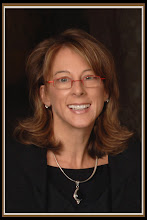
Elyn Jacobs is a certified cancer coach, a breast cancer survivor, and the Executive Director for the Emerald Heart Cancer Foundation.  She empowers women to choose the path for treatment that best fits their own individual needs.  She is passionate about helping others move forward into a life of health and wellbeing. To learn more about Elyn’s coaching services, please visit:  http://elynjacobs.wordpress.com.


Tuesday, November 1, 2011

It’s My Cancer

  The following is a guest post I wrote for Breast Cancer Partner's Blog..... It’s My Cancer


“You have cancer” Three of the most dreaded words you can hear from your doctor.  Your world has changed and you feel a loss of control.    A moment ago you were a student, parent, wife, maybe even a doctor. Now, suddenly, you are a patient.  In the ensuing panic, disbelief, fear, and confusion you have to make decisions.  Likely right now you think “I can barely breathe, let alone function…how am I to figure all this out?”  Well, unfortunately, your life and your quality of life depend on it.  Now is the time to get help, but from who?

A cancer diagnosis leaves one so very vulnerable, not only to the illness, but also to the people all around us. Given all the options today, we have many decisions to make.  We may choose conventional, alternative or a combination of both, and within each modality, there are yet more options. Friends often think they are helpful when criticizing a chosen treatment plan.  Many women diagnosed with breast cancer choose not even to discuss with friends their choice for surgery, as surely some friends will be adamant about mastectomy and others lumpectomy, and this is terribly unfair.  I always say that when a friend or loved one is diagnosed, support is essential, information is helpful, but advice is unacceptable.  It is for us and us alone to choose and be confident with a path chosen, and it is unfair of others to cast doubt or offer opinions. Doubt will bring fear and stress, both of which can be detrimental to healing and survivorship and can compromise all efforts for a positive outcome. 

The recent press regarding Steve Jobs is a perfect example. One might say that Steve Jobs was a bright man.  One might say he made many critical decisions in his life.  One might say that he was not afraid to take chances.  One might even say that he was a trendsetter.  Why is it that friends, family and the media felt they had the right to challenge his choice of a treatment plan and have the right to second guess it now?  To say that “he refused potentially life-saving cancer surgery for nine months, shrugging off protests from his family and opting instead for alternative medicine” is unfair.  Potentially life-saving surgery? Some doctors have argued that his cancer was curable, others say the opposite. Given a diagnosis of a cancer for which conventional medicine has not been particularly successful, it would only make sense to explore all options.  This was his cancer and it was his decision to choose a plan of treatment.  Andrew Grove told Jobs he was crazy.  Art Levinson was frustrated that he could not persuade Jobs to have surgery. It wasn’t their cancer. What matters is that Steve Jobs had confidence in his choice.  What matters is that Mr. Jobs made the final decision on each new treatment regimen.  What matters is that he had the freedom to choose and to change his mind. What is not acceptable is for others to challenge his decisions. What is important is to have an unbiased advocate to assist and support you through treatment. We will never know if it was the destructive mind-body criticism of others that brought on his demise.  We do know that Steve Jobs made sure he sought out all the options and did all he could do to battle his cancer. Knowing your options and obtaining the necessary information is critical in order to make the right choices for you, for your cancer.

There are many options for treating cancer.  Conventional (allopathic) medicine offers surgery, radiation, chemotherapy, and other medical interventions to battle cancer.  For many, this is the route to take.  For others, surgery may be acceptable, but radiation and or chemotherapy either are not an option or are not acceptable to the patient.  Some will take the integrative approach, combing conventional with alternative therapies.  Massage, acupuncture, Chinese Herbal Medicine, nutritional therapy and other treatments associated with complementary medicine can support patients during and post treatment by lessoning the side effects, improving quality of life and improving long-term survival. Still others will choose to use only alternative methods.  The important thing is to choose what feels best to you.  Keep in mind that within these methods, there will be further decisions to make, for example which of the surgeries available would be best or which alternative treatment would be the most effective. Doctors differ in their methods and protocols.  Many women find it a challenge to find a doctor who can hear and respond to her opinions and questions, and all too often women are pushed into a path for treatment that does not suit her core needs or desires. Sadly, some doctors forget that we endure treatment to live, and therefore quality of life is important.

Information is power and it has never been more important to be informed and knowledgeable about your medical care.  My goal is to get this information to women and to empower and support them to make choices that fit their own individual needs. As a survivor and experienced coach, I understand the questions and concerns faced by the newly diagnosed, and I make sure that my client’s voice is heard.  My mission is to help women find the right treatment, doctors and post cancer care, even if that means second or even third opinions and firing a few doctors.  I know firsthand, that under these circumstances, it is very difficult to concentrate on all that a doctor is saying, so I accompany women on visits to the doctor where I take notes and ensure the tough questions get asked. Once team and treatment plans are chosen, we work together through the process. I feel strongly that no woman should have to face cancer alone.

In good health,
Elyn Jacobs

**********************************************************
Elyn Jacobs is President of Elyn Jacobs Consulting, and a breast cancer survivor and certified cancer coach.  She helps women diagnosed with cancer to navigate the process of treatment and care, and she educates about how to prevent recurrence and new cancers.  She is passionate about helping others get past their cancer and into a cancer-free life. To learn more about Elyn’s coaching services, please visit:  http://elynjacobs.wordpress.com

Monday, October 3, 2011

Psychological Healing

The following is a guest post by Katie Evans.  Katie is funny, social, and outgoing and doesn't plan on letting breast cancer get in the way of any of that. Diagnosed in March at the age of 26 and having completed chemo in September, she is on the mend. She has an incredible support system and plans on paying it forward to other young women fighting breast cancer.  When I read her post, I asked if I might share it.  Thank you Katie…
It feels so good not to live my life in 3 week, chemo-based, increments anymore. I feel like I can plan a little for the future and not have to cram everything into two week periods before I’m laid up from chemo again. I am well into my Christmas shopping and planning my weekends in October and November without having to keep my bowel activity in mind.
I am still far from ‘normal’ but things are looking up. My hair is growing back and I’ve started using shampoo AND conditioner, my stupid armpit hair is growing back as well (too much information??), but my eyelashes and eyebrows are still MIA. I still get stared at but keep in mind, I’m 6 feet tall, queen size is an understatement, and I’m bald; people are going to stare. In the beginning, the staring didn’t bother me because I was very conscience of being bald; I was checking myself out in a mirror every chance I got. But as I got used to my bald head and strangers continued to stare, I kind of got annoyed. I wanted to go over to them and say ’yes, it’s cancer’ but instead I just kept walking. It took me a while to realize that not everyone staring was doing it out of ignorance, I’m sure some were looking at me thinking of a loved one who had gone through chemo, and maybe others were thinking that I was brave leaving the house with my bald head uncovered.
Someone mentioned to me that I should go over to the gawkers and say, very seriously, ‘do you have any questions?’ and I loved the thought of that. Those who are ignorantly looking at me probably do have a lot of questions about cancer, and chemo, and being bald, etc. etc. etc. and wouldn’t it be awesome to be able to answer those questions right on the spot (although, who would say ‘yes, actually, I do have a few questions…’?).
Having cancer has made me re-evaluate my reaction to otherwise frustrating situations. When someone cuts you off on the way home maybe he was preoccupied because his doctor just told him he had cancer. When someone doesn’t hold the door open for you when your hands are full, maybe that person is thinking about his/her daughter that’s in chemo who he/she can’t be with her every day. When someone screws up your morning coffee, maybe she is thinking about the lump she found this morning in the shower. If 1 in 3 people will have cancer, imagine how many people are affected by it. Maybe when people are staring at me, they are admiring the way I’m kicking ass.
Keith and I were talking about the day that I was diagnosed last night. He said that he remembers thinking about the long road that we had ahead of us and now look at where we are, I finished chemo and am starting to heal. I had a bit of a cry tonight as I looked back at the past 6 months. It’s almost like when you’re going through it, you don’t realize the severity of it all but looking back it sets in a little bit. I think of those days that felt like years, the days that felt like no matter what I did, I was going to feel deflated and alone and ‘sick’ for the rest of my life; I can safely say, chemo was the scariest time of my life.
I have learned a lot that can’t be understood unless you’ve gone through a cancer diagnosis/treatment and I think anyone who has been through it ‘just gets it’ and those who haven’t ‘just don’t', and by ‘just don’t’ I guess I should say ‘just can’t’. I was prepared for the physical reaction to chemo but not the psychological. If you know someone who is going through or has gone through cancer (the psychological healing is lifelong – it doesn’t end when treatment ends) please call them or send them a card this week. Tell them that you are thinking about them and ask them if there is anything you can do for them. Better yet, just do something nice for them because the odds of them asking for anything is slim to none. Many times, I felt helpless and asking for help would have made me feel worse but having something nice done for me without having to ask felt so good.  
I had many friends checking in on me throughout chemo and as I have said many times before, my support was incredible but there were many friends who called once or not at all. To be fair, many friends just don’t/can’t get it (how would they if they’d never been there) but having gone through it, if I can pass on any advice to those caregivers or friends of patients; let them know that you are thinking about them, let them know that you will be there from the day of diagnosis, to chemo graduation day, from the first doctor’s appointment to the last day of Tamoxifen, from the first day without a breast to the last breath. I just think that if I wasn’t warned about the psychological part of cancer, how can someone without cancer know about it? 
Women in their 20s with breast cancer is not a group I wanted to belong to however, now that I am a member, I am honored to fight with these women. It’s not only amazing how many young women are affected by breast cancer but it blows me away how strong they are. It’s like when the cancer/treatment made them physically weaker it made them emotionally stronger at the same time.
Elyn Jacobs

******************************************************************
Elyn Jacobs is the Director of Grants for the Emerald Heart Cancer Foundation and a breast cancer survivor.  She helps women diagnosed with cancer to navigate the process of treatment and care, and she educates about how to prevent recurrence and new cancers.  She is passionate about helping others get past their cancer and into a cancer-free life.


Friday, July 8, 2011

Tamoxifen, Friend or Foe?

I follow many, many blogs and cancer-related online chat forums. One I saw today really stung. A woman asked if anyone taking Tamoxifen had ever experienced debilitating bilateral posterior leg pain and the inability to walk or sit without intense pain. She mentioned that she had done all the tests, MRIs, x-rays, etc. with no resulting explanation for her pain. She added that her doctor took her off the Tam and her symptoms subsided significantly. Another woman mentioned that issue plus a host of others, including a persistent and unexplained cough.

Well, I have been on Tam for four years, and three years ago I started experiencing intense pain while sitting, then found it very painful to walk. I saw one doc, told me pelvic misalignment was the issue, and after a few of his treatments, I got worse, I could only walk if I dragged one leg. So much for him. Saw another Doc, said it was two torn hamstring muscles, the left side being severe. I explained that this was unlikely as surely I would have known when this happened (something like a sudden sharp pain would be memorable). However, I was desperate to walk so I agreed to try his “treatment”, a painful and useless platelet procedure. No change. Saw another Doc, he viewed the same MRI results and said that it wasn’t a hamstring issue, it was a disc issue. He offered another painful procedure. This time I was not gullible and refused. He then suggested physical therapy. No change. Next I consulted an integrative chiropractor; he suggested misalignment and stress being the culprit. I will never know if he was right, but after a year of his treatments and the massage therapy he suggested, I am fine. Was it the Tam? Who knows, but I am starting to think so.

And then there’s the cough…..

In December 2010, I started coughing. Still coughing a few months later, I went to my Internist and since I felt otherwise fine, he suspected lung cancer. Thankfully the tests were negative, and he suggested it could be asthma and allergies. Okay, so that makes sense. I started to believe maybe he was right, and that perhaps my mother’s chronic cough could have been that too, undiagnosed. Now, I am not so sure…..was it, is it the Tam? I will have to take this up with my oncologists, but so far, NONE of my doctors suggested this could be the culprit. It’s well known that bone and joint pain can be common, but not the type of pain at issue here. I’d like to think that they are simply not aware of the connection as I happen to have much respect for my doctors…..at the moment.

Perhaps it is all coincidence. Perhaps not. However, one thing I do know is that before an oncologist so quickly orders Tam, AI’s or Chemo for that matter, more needs to be learned and side effects/symptoms taken seriously. I would hate to think that I spent thousands and thousands of dollars and endured years in pain dealing with problems that could have been eliminated by stopping the Tam. Are my symptoms a small price to pay for avoiding recurrence? Maybe, but again….quality of life doesn’t seem to concern most doctors….maybe it’s time they started teaching this in med school. One last note….did I mention that inflammation increases the risk for recurrence….humm….wonder how much of it I’m hosting in my chest, legs, and derriere. Prevention should not be part of the problem.

To read more the possible side effects of Tamoxifen, please view:
http://www.drugs.com/sfx/tamoxifen-side-effects.html

Elyn Jacobs
elyn@elynjacobs.com
elynjacobs.blogspot.com


**********************************************************
Elyn Jacobs is President of Elyn Jacobs Consulting, Inc. and a breast cancer survivor. She empowers women diagnosed with cancer to navigate the process of treatment and care, and she educates about how to prevent recurrence and new cancers. She is passionate about helping others get past their cancer and into a cancer-free life.

Wednesday, May 4, 2011

Cancer? Find the Right Team

Cancer treatment is not one-size-fits-all. You wouldn’t go to a community hospital for cancer surgery, nor would you go to a cancer center for hemorrhoid removal. Further, all cancer centers are not alike; each has a different philosophy, a different culture, a different specialty. It’s all about choosing the right facility and the right team for your cancer.

Sandy, a patient with stage III colon cancer, came to me a few months ago, wanted me to go with her to see her surgeon. The surgeon was very nice and she felt comfortable with him. However, it was very obvious that this doctor did not specialize in colon cancer. I begged her to let me take her to a specialist. After meeting the specialist, she immediately realized she had almost made a huge mistake, possibly the biggest mistake of her life.

Maggie, diagnosed with stage 0 breast cancer, went to a prominent cancer facility for a lumpectomy. When she woke up, she had a wound from nipple to underarm. Such drastic surgery was completely unnecessary for her type of cancer. A small, discreet incision would have allowed for complete removal of the tumor and for clear margins. She came to me distraught. Why did this happen? She chose the wrong team. Her team focused on only one thing, removing the cancer; they overlooked the fact that she was a young woman with a long life to live. I wish she had come to me before she made that fateful decision. Some might say, but why do you care what you look like, you have cancer! Because there is life after cancer, that’s why, and it is most often completely unnecessary to come out of it looking like a train wreck.

When I was diagnosed, I went to two prominent cancer specialists. One was lovely, but I felt I would be getting “my mother’s mastectomy”. I wouldn’t buy an out-dated cell phone and I certainly wouldn’t accept outdated cancer surgery. The second asked me if I wear evening gowns or bathing suits. Why? It was possible to perform my bilateral mastectomy from underneath the breast instead of from the side or through the middle. I researched this doctor, found out he had performed more mastectomies than any other doctor in NYS. If you are lucky enough to see my breasts, you would challenge the fact that I had surgery! I wanted a doctor who uses cutting edge thinking, someone who continues to learn new ways to perform surgery. If your doctor is not open to such discussions or dismisses your questions as frivolous, find a new team. If you are diagnosed with cancer, you need to find the specialist who is best for your type of cancer and for your needs. You owe it to yourself to get it right the first time.

I am a cancer coach; I help women diagnosed with cancer to navigate the process of treatment and care, and educate about how to prevent recurrence and new cancers. I am passionate about helping others get past their cancer and into a cancer-free life.

Elyn Jacobs
elyn@elynjacobs.com